
A denied dental claim usually means the plan needs something more from your office. Start with the reason on the EOB. Then decide whether the claim needs a quick fix and a resubmission, or a written appeal. Send it before the plan's deadline, write down the next follow-up date, and check on it every week until it's paid or closed. Then fix the cause so the same denial doesn't keep coming back.

A denied claim usually needs one more thing from your office, and a date to follow up.
Step 1: Read the denial reason first
Every denial comes with a reason, usually a code and a short note on the EOB or in the plan's portal. Read it before anyone calls the plan or resends anything, because it tells you what the plan wants. Common ones include:
Missing information, like an x-ray, a narrative, a perio chart, or a tooth number.
Eligibility, such as coverage that ended or a patient listed under the wrong subscriber.
Frequency or waiting period, when the plan says the service was done too soon.
Coding, when the procedure code doesn't match the notes or the plan's rules.
Duplicate claim, when the plan thinks it already got this claim.
Late filing, when the claim reached the plan after its filing limit.
If the reason isn't clear, call the plan and ask exactly what they need to pay it. Write down who you spoke with, the date, and any reference number.
Step 2: Decide whether to fix or appeal
Most denials fall into one of two paths.
Fix and resubmit when something was missing or wrong on the claim. Add the attachment, correct the code or tooth number, update the subscriber details, and send a corrected claim. Once the plan has what it asked for, it can reprocess the claim.
Appeal when the claim was right and the plan still said no. This often comes up with frequency limits, "not medically necessary" decisions, or downgrades to a cheaper procedure. An appeal is a written request for the plan to look again, backed by your records.
If you're not sure which path fits, the plan's portal or provider line can usually tell you whether they want a corrected claim or an appeal.
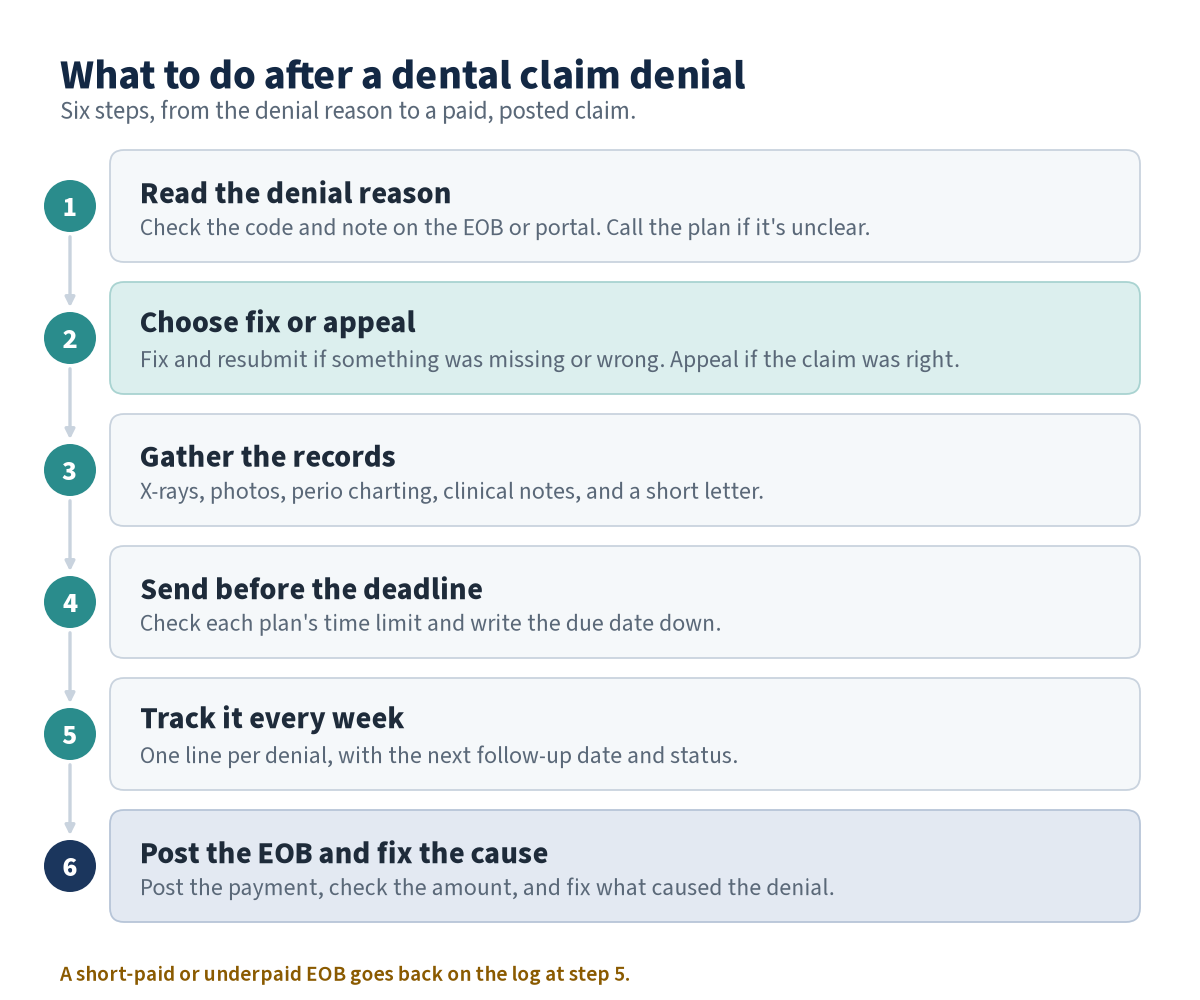
Most denials follow the same path: read the reason, fix or appeal, send it on time, and track it until it’s paid.
Step 3: Build a strong appeal
A good appeal is short, clear, and easy for the reviewer to say yes to. Include:
A brief letter with the patient, the date of service, the procedure, the claim number, and why the treatment was needed.
Supporting records, such as x-rays, intraoral photos, perio charting, and the clinical notes for that visit.
The plan's own language, if their policy supports the treatment.
A clear ask: reprocess the claim and pay it.
Keep a copy of everything you send, and note the date it went out.
Step 4: Watch the deadline
Every plan sets its own time limits for corrected claims and appeals. Some give you plenty of time, and some don't. Look up the limit for each plan you work with and write the due date next to every open denial. A denial that sits past the deadline is much harder to recover, so keeping every due date in view is one of the most important parts of this process.
Step 5: Track every open denial every week
Denials get lost when they live in someone's head or in a pile on the desk. Keep a simple log with one line per denied claim:
Patient and date of service
Plan and claim number
Denial reason
What you sent (corrected claim or appeal) and when
Next follow-up date and appeal deadline
Status: open, sent, paid, or closed
Review the log once a week. Any claim with no update in two weeks gets a call. When a paid EOB comes back, enter and post it to the patient's ledger right away, and check that the payment matches what you expected. A claim that comes back short-paid or underpaid goes right back on the log.
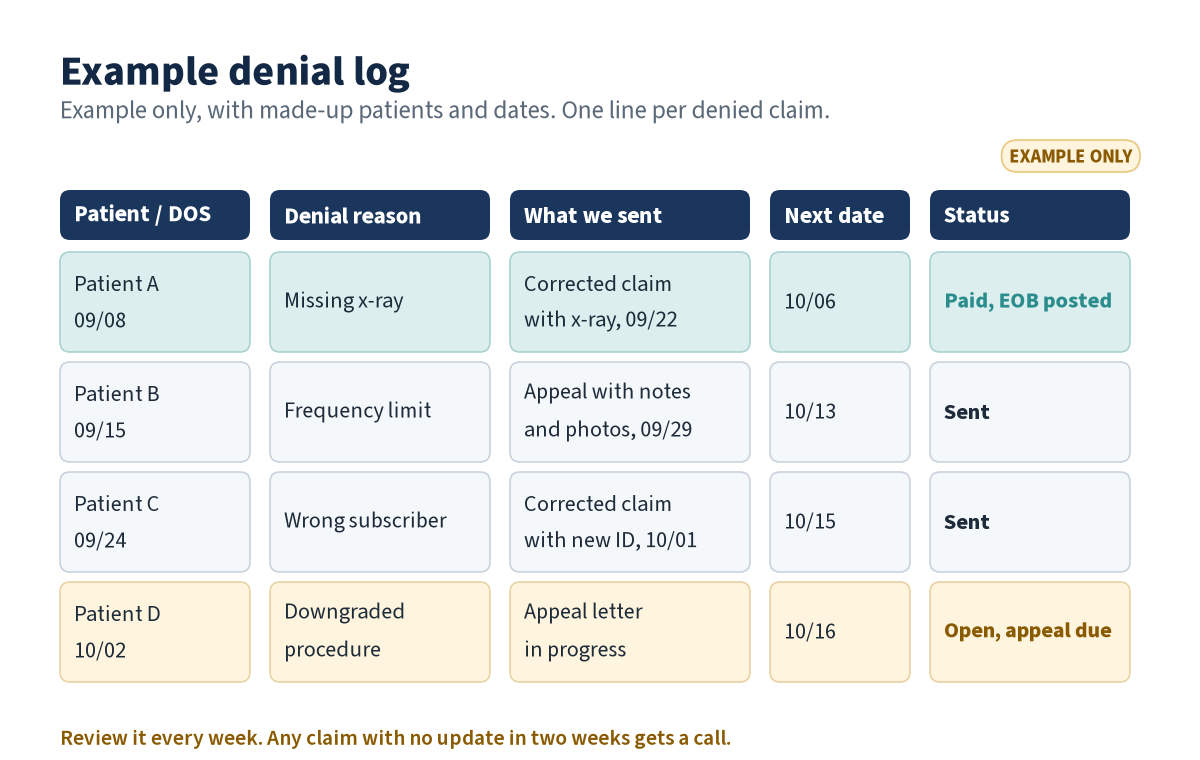
Example only, with made-up patients and dates. One line per denied claim, with a reason, what was sent, and the next date.
Denied claims also show up on your insurance aging report. Our guide on how to read a dental aging report shows how to spot the ones that have been sitting the longest.
Step 6: Stop the same denial from coming back
Once a month, look over the log and group denials by reason. If the same reason keeps showing up, fix the step in the office that causes it. That might mean checking eligibility before every visit, attaching x-rays to certain procedures by default, or adding a narrative template for crowns and scaling and root planing. For more on why claims get denied in the first place, see our post on why dental claims get denied and how to prevent them.
When it's time to get help
If denials are stacking up faster than your team can work them, or appeal deadlines keep slipping by, it may be time to bring in help. Our team at SoRa works denied, short-paid, and underpaid dental claims, with a dedicated biller for your office. We follow up with the plans, send corrected claims and appeals with each plan's deadlines in view, and enter and post every EOB into your patient ledgers, so your aging report shows what's really still owed. It's one flat monthly fee, never a percentage of your collections. To see the full picture, read what an outsourced dental billing service includes.
FAQ
Can a denied dental claim still get paid? Often, yes. Many denials come down to missing information or a small error. Once you fix it and resubmit, or send an appeal with the right records, the plan can reprocess the claim and pay it.
What's the difference between resubmitting a claim and appealing it? You resubmit when something on the claim was missing or wrong, like an x-ray or a code. You appeal when the claim was correct and the plan still denied it, and you're asking them to review the decision.
How long do we have to appeal a dental claim denial? It depends on the plan. Each one sets its own limit, so check the plan's provider manual or call them, and write the due date next to every open denial.
What should we include in a dental appeal? A short letter with the claim details and why the treatment was needed, plus supporting records such as x-rays, photos, perio charting, and clinical notes. End with a clear request to reprocess and pay the claim.
Can SoRa work our denied claims? Yes. Our team works denied, short-paid, and underpaid claims, sends corrected claims and appeals, and posts the EOBs when they're paid. A Free Aging Check is an easy way to start. It's a free first look at your unpaid, pending claims, so you can see what's stuck and what's worth working first.
Have denied claims piling up?
Start with a Free Aging Check, a free first look at your unpaid, pending claims, so you can see what's stuck and what's worth working first. You can also call us at 201-564-0439 or book a time to talk.