

Most slow insurance pay starts with a claim that’s waiting on one more thing from the office.
When dental insurance is slow to pay, the cause is usually something on the claim itself, and most of the fixes are in your office's hands. The four most common reasons are a missing attachment, an eligibility gap, a code that needs to match the notes, and a claim that sits with no follow-up. When you send complete claims, check coverage before the visit, match codes to the chart, and check on open claims each week, payments tend to come in sooner and with fewer surprises.
What happens between "sent" and "paid"
Every claim goes through the same few steps. The office sends it, the plan receives it, the plan reviews it, and then the plan pays it or asks for more. When the plan needs something, the claim stops and waits. Often the office only hears about it when an EOB or a letter shows up, and sometimes the office hears nothing at all.
That waiting time is where most slow pay comes from. A claim that goes out complete and correct has the clearest path to payment. A claim that's missing one piece can sit for weeks until someone notices.
1. Missing attachments
Many procedures need proof before the plan will pay. Crowns, buildups, scaling and root planing, and many oral surgery codes often need x-rays, a narrative, perio charting, or intraoral photos. When those are missing, the plan holds the claim or sends a request for more information.
What your office can control: Keep a short list of the procedures that need attachments for your main plans, and attach them before the claim goes out. A simple narrative template for crowns and scaling and root planing saves time and keeps the wording consistent.
2. Eligibility gaps
If the patient's coverage ended, changed, or is listed under the wrong subscriber, the claim stalls. The same happens when a plan has a waiting period, a frequency limit, or a plan year maximum that's already been used.
What your office can control: Check eligibility and benefits before the appointment, especially for new patients and anyone who mentions a new job or a new plan. Confirm the subscriber's name, date of birth, and member ID exactly as the plan has them.
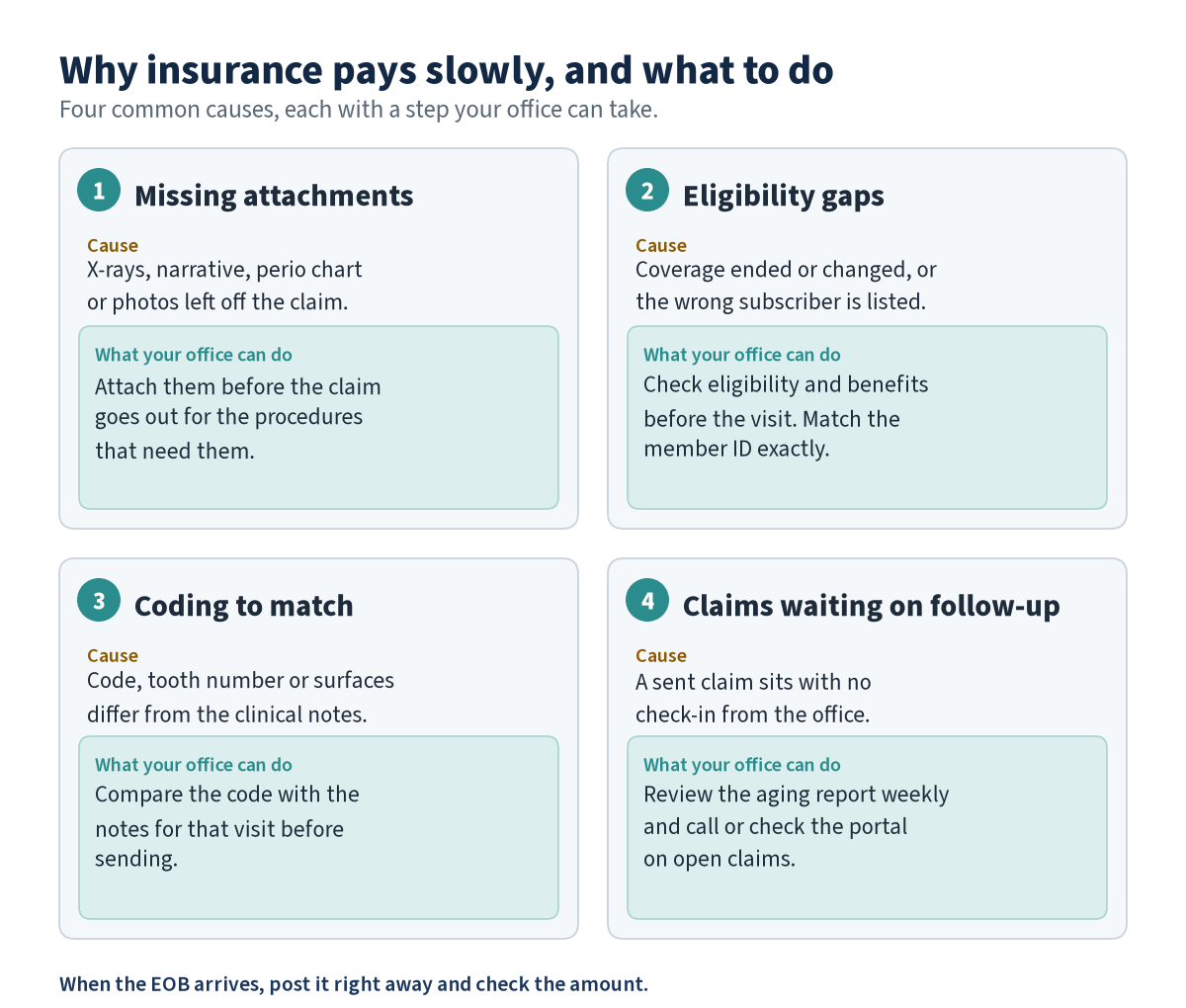
The four most common reasons insurance pays slowly, and the step your office can take for each one.
3. Coding that needs a closer match
The procedure code on the claim has to match the clinical notes, the tooth number, the surfaces, and the plan's rules. When something lines up wrong, the plan may hold the claim for review, pay it at a lower rate, or send it back.
What your office can control: Before a claim goes out, have someone compare the code with the notes for that visit. Check tooth numbers and surfaces, and confirm that the code reflects what was actually done. Clear, complete clinical notes make this step quick.
4. Claims waiting on follow-up
This one is the easiest to miss. A claim goes out, and everyone assumes the plan will pay it. But claims get lost, get held for one more document, or get paid short, and the plan rarely calls to say so. Without a weekly check, a claim can quietly move from 30 days to 60 to 90 on your aging report.
What your office can control: Pull your insurance aging report every week and check on anything that's been open longer than you expect. Call the plan or check the portal, write down what they said, and set the next follow-up date. Our guide on how to read a dental aging report shows which claims to look at first.
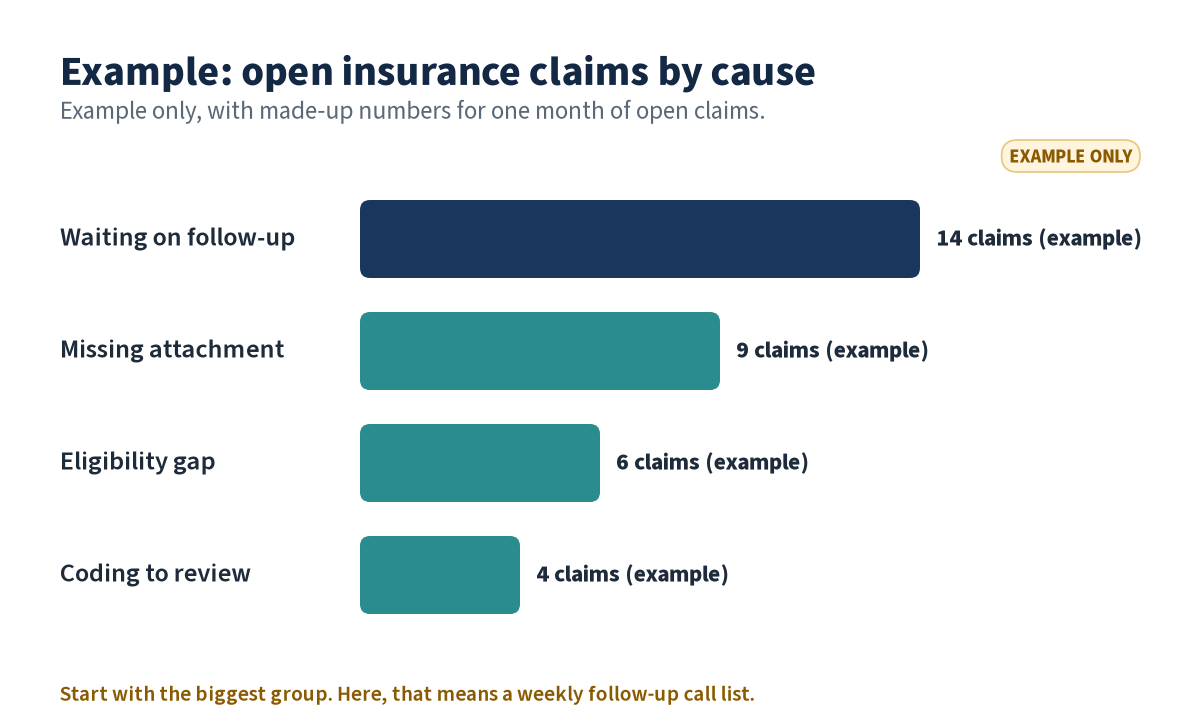
Example only, with made-up numbers. Sorting open claims by cause shows where to start.
When the payment finally comes in
Getting paid is only half of it. Enter and post each EOB to the patient's ledger as soon as it arrives, and check that the amount matches what you expected. A short-paid or underpaid claim goes right back on your follow-up list. Posting EOBs promptly also keeps your insurance and patient balances accurate, which we cover in insurance balances vs patient balances.
If the plan sends a denial instead of a payment, read the reason first and decide whether to fix and resubmit or appeal. Our step-by-step post on what to do after a dental claim denial walks through it.
When it's time to get help
If your team is busy with patients and claims keep slipping past 60 and 90 days, that's a good time to bring in help. Our team at SoRa follows up with the plans on your open claims, works denials, short-paid and underpaid claims, and enters and posts your EOBs into your patient ledgers. Every office gets its own dedicated biller. It's one flat monthly fee, never a percentage of your collections. To see the full picture, read what an outsourced dental billing service includes.
FAQ
Why does dental insurance take so long to pay? Usually because the claim needs something before the plan can pay it: an attachment, updated eligibility details, a code that matches the notes, or simply a follow-up call. Complete claims and weekly follow-up help payments come in sooner.
How can our office get insurance claims paid faster? Check eligibility before the visit, attach x-rays and narratives when the procedure calls for them, match codes to the clinical notes, and review your insurance aging report every week.
What should we do if a claim has been sitting with no response? Call the plan or check its portal. Confirm the plan received the claim, ask what it needs to pay, and write down the date, the person you spoke with, and any reference number. Then set the next follow-up date.
Is a slow payment the same as a denial? Slow payment usually means the claim is waiting on something or hasn't been reviewed yet. A denial means the plan has made a decision and sent a reason. Both need follow-up, and both show up on your aging report.
Can SoRa help with our slow-paying claims? Yes. Our team follows up on open claims, works denied, short-paid and underpaid claims, and posts the EOBs when they're paid. A Free Aging Check is an easy way to start. It's a free first look at your unpaid, pending claims, so you can see what's stuck and what's worth working first.
Waiting on insurance payments?
Start with a Free Aging Check, a free first look at your unpaid, pending claims, so you can see what's stuck and what's worth working first. You can also call us at 201-564-0439 or book a time to talk.