
Yes, many dental claims over 90 days can still be collected. What matters most is the plan's deadline. Each plan sets a timely filing limit for new claims and a time limit for appeals, and as long as a claim is inside those limits, you can follow up, fix it, resubmit it, or appeal it. Start with the claims closest to their deadline, find out what each one needs, then send it in and set a follow-up date.

A claim in the 90+ column is often still worth working, as long as it’s inside the plan’s deadline.
Why claims end up in the 90+ column
Claims rarely get old on purpose. Usually one of a few things happened: the claim never reached the plan, the plan asked for an x-ray or narrative and the request got missed, the claim was denied and set aside, or it was paid short and nobody followed up on the balance. On a busy front desk, patients come first, and claims that need a phone call slide down the list.
If you want a quick refresher on the buckets, our guide on how to read a dental aging report walks through each column and the lines worth a closer look.
How timely filing limits work
A timely filing limit is the window a plan gives you to send a claim after the date of service. Appeals have their own window, usually counted from the date on the EOB or denial letter. These limits differ from plan to plan and sometimes between plan types with the same carrier, so the best source is your provider agreement or the plan's provider manual.
Two things help a lot here:
Proof of the first send. A clearinghouse report or portal record showing the date you first sent the claim can support a late claim, because it shows you filed on time.
Notes from every call. The date, the name of the person you spoke with, and the reference number all help if you need to show you were working the claim.
Sort old claims by what they need
Once you know the deadlines, sort the 90+ list by next step instead of working it from top to bottom. Most old claims fall into one of four groups:
Check status. You have no response at all. Call or check the portal to confirm the plan received it.
Resubmit with a fix. The plan needs an attachment, a corrected code, a tooth number, or updated subscriber details.
Appeal. The plan made a decision you disagree with. Our post on what to do after a dental claim denial covers how to read the reason and build the appeal.
Close to the deadline. Any claim near its filing or appeal limit moves to the top, whatever group it's in.
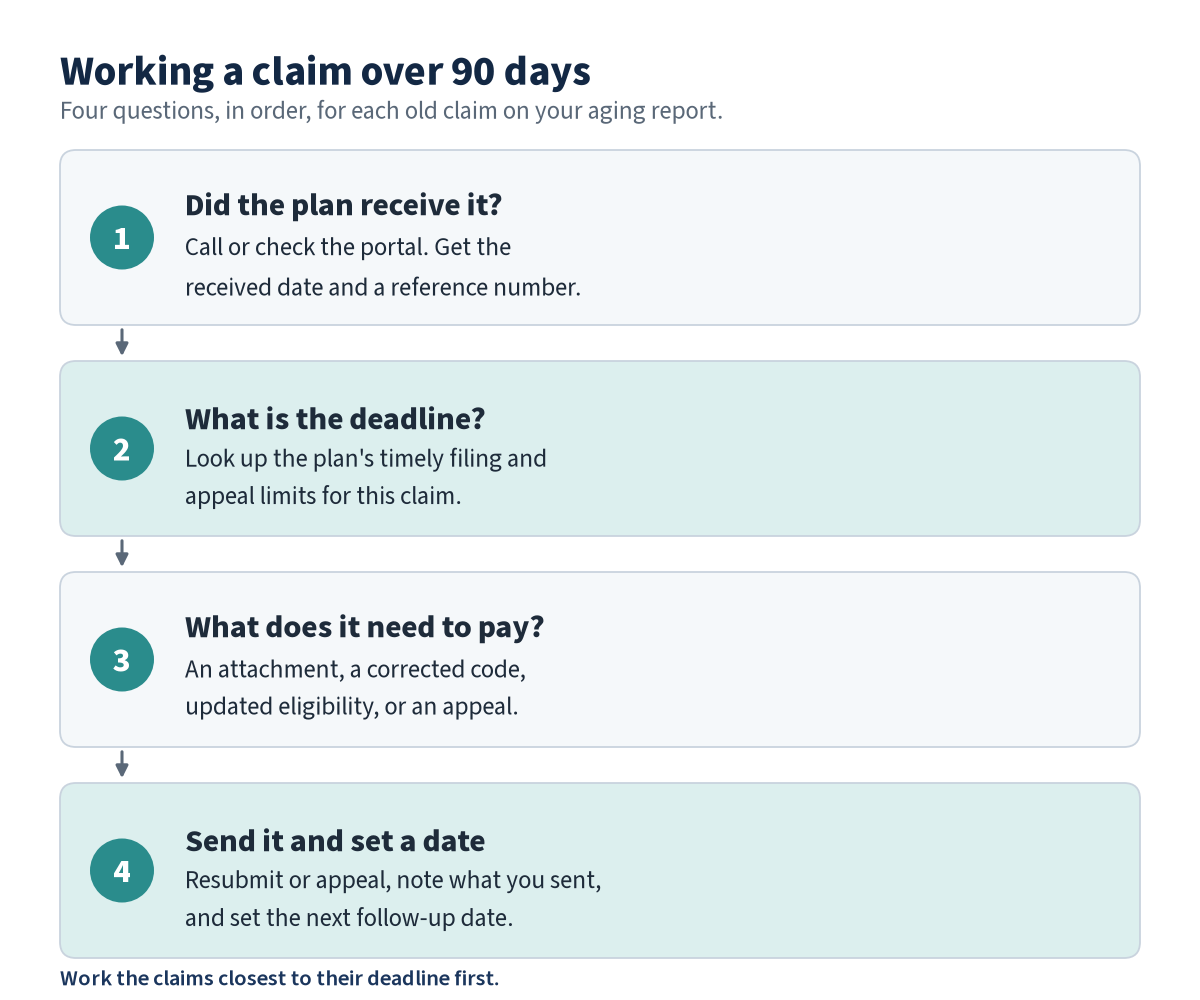
Four questions to ask about each claim over 90 days, in order.
Work the oldest and largest claims with a plan
With the list sorted, set a weekly rhythm. Block time for the claims closest to their deadline first, then the larger balances, then the rest. For each claim, write down what you did and the next follow-up date, so the next person who picks it up knows exactly where it stands.
When a payment comes in, post the EOB to the patient's ledger right away and compare the amount with what you expected. A short-paid or underpaid claim goes back on the list. Posting promptly also keeps your patient balances accurate, which we explain in insurance balances vs patient balances.
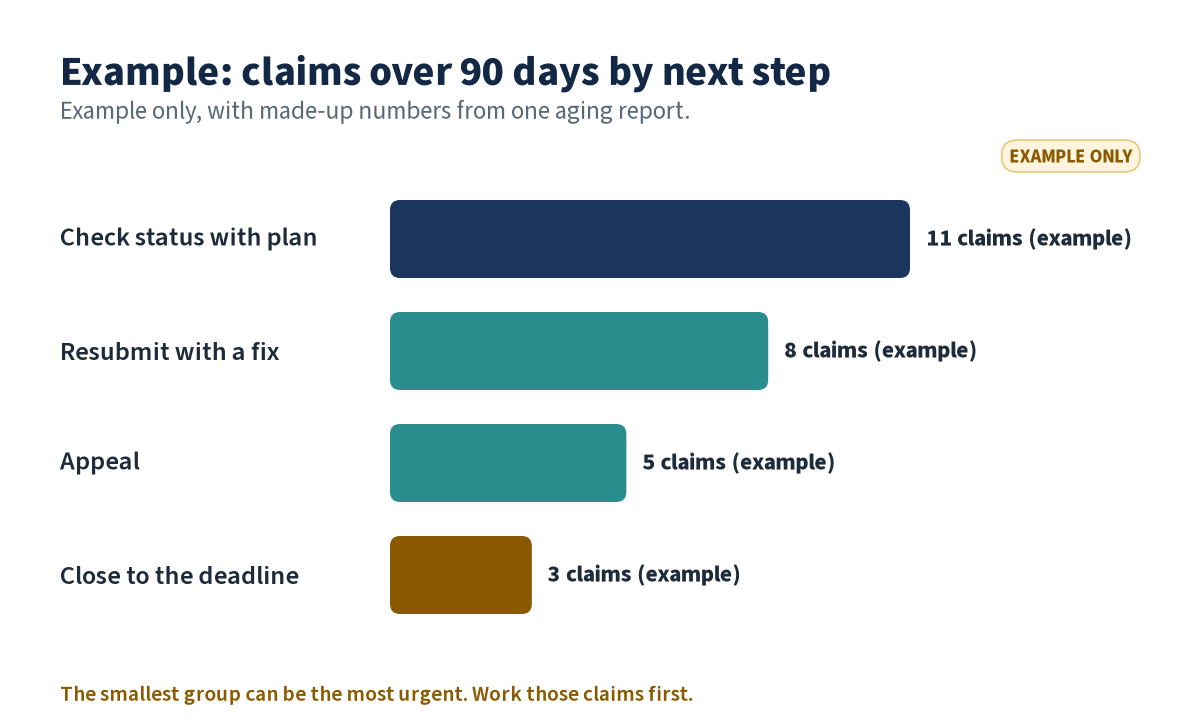
Example only, with made-up numbers. Sorting old claims by next step shows where to start.
Keep new claims from reaching 90 days
The best fix for old claims is fewer of them. A few habits keep new claims moving:
Check eligibility and benefits before the visit.
Attach x-rays, narratives, and perio charts for the procedures that need them.
Match codes, tooth numbers, and surfaces to the clinical notes before sending.
Review the insurance aging report every week and follow up on anything past 30 days.
Our post on why dental insurance payment is slow goes deeper on each of these.
When it's time to get help
If your 90+ column keeps growing, or you have a backlog nobody has time to touch, that's a good time to bring in help. Our team at SoRa handles aging cleanup: we follow up with the plans on your open claims, resubmit and appeal where it's needed, work denied, short-paid and underpaid claims, and enter and post your EOBs into your patient ledgers. Every office gets its own dedicated biller, and it's one flat monthly fee, never a percentage of your collections. See what an outsourced dental billing service includes for the full picture.
FAQ
Can we still collect on dental claims that are over 90 days old? Often, yes. If the claim is still inside the plan's timely filing or appeal limit, you can follow up, fix it, resubmit it, or appeal it.
How do we find a plan's timely filing limit? Check your provider agreement or the plan's provider manual, or call provider services and ask. Write down the answer and where it came from so your team can use it again.
What if we sent the claim on time but the plan says it never got it? Pull your clearinghouse report or portal record showing the original send date, and resubmit with that proof. Note the call, the person you spoke with, and the reference number.
Which old claims should we work first? Start with claims closest to their filing or appeal deadline, then the largest balances, then the rest. Sorting by next step, such as check status, resubmit, or appeal, makes the list faster to work.
Can SoRa help clean up our old insurance claims? Yes. Our team handles aging cleanup, follows up on open claims, works denials, short-paid and underpaid claims, and posts the EOBs when they're paid. A Free Aging Check is an easy first step. It's a free first look at your unpaid, pending claims, so you can see what's stuck and what's worth working first.
Have claims sitting past 90 days?
Start with a Free Aging Check, a free first look at your unpaid, pending claims, so you can see what's stuck and what's worth working first. You can also call us at 201-564-0439 or book a time to talk.